The Place That Would Notice If You Were Gone
There's a concept that's been written about by sociologists, urban planners, and community builders for decades - the idea of a "third place." Your first place is home. Your second is work. Your third is somewhere else entirely. Somewhere you choose.
And yet, for all the theory written about it, I don't think words quite capture what it actually feels like to have one. Or what it costs you when you don't.
We Were Made for This
Humans are, at our core, wired for connection. Not as a nice-to-have. Not as a lifestyle preference. Evolutionarily, biologically, we are built to seek belonging. It was once what kept us alive, but modern life has quietly dismantled this.
We live in a world that asks a lot of us independently. Both adults in a household working - often because there's simply no other way to make it work. Solo parents carrying everything alone. Single adults building a life without a built-in support system around them. People doing life largely on their own, not because they want to, but because the structure of how we live doesn't naturally create the village it once did.
Some cultures still hold onto that communal model where the weight of responsibility is shared, and through that community is found. But for many of us, that's not the world we live in.
And when you spend most of your waking hours working, what's left? Unless you actively, intentionally carve out space for community - it simply doesn't happen. Third places don't build themselves.
What Happens When There Isn't One
It's worth sitting with this question for a moment.
For children, life is largely divided between home and school - and school, as wonderful as it can be, is also where social dynamics can get complicated. Often friendships fracture and hierarchies form. A third place gives a child something school can't take away from them - a network that exists outside of those challenges, other people who matter to them, and a space where they're valued for something they love doing. A child's problems (though trivial to the adult mind) are their entire world - and a third place gives them somewhere to breathe when that world feels heavy.
For adults, it's no different - we've just normalised not having one. Without a third place, most adults move between just two worlds - work and home. If either of those is difficult (and at some point, for most people, both are), there's nowhere to exhale. Sometimes work carries stress, difficult dynamics, misaligned values and unrealistic expectations, or it is hard simply because of the sheer volume of time it demands. Home carries its own challenges as well.
A third place is the reprieve. The place where you don't have to be anything in particular.
Here's what's interesting. Most parents and caregivers know this instinctively for their children. We sign them up for sport, dance, art classes and clubs. We drive them across town on Saturday mornings without a second thought, because we understand how important it is for them to have community, connection and belonging. We get it for them completely.
And then we quietly give up our own.
One of the most common things I observe is adults who have let their third place go in order to facilitate their children's. The same world that stripped away the village and told us to do life independently also handed us an unspoken rule about parenthood - that good caregivers are entirely self-sacrificing. So, we spend our weekends at the sidelines of someone else's joy, never quite finding space for our own.
The truth is, we can't pour from an empty cup. Belonging matters, connection sustains us, and we all need somewhere to feel valued and seen.
What a Third Place Actually Gives You
Third places are usually built around a shared interest - a gym, a book club, a community garden, a sports team, a dance studio. But what makes them special isn't the activity itself. It's what the activity creates.
Nobody is there out of obligation. There are no grades, no performance reviews, no career progression, no social pecking order. Nobody is measuring anyone. You're there because it brings you joy, and that joy multiplies when it's shared with people who feel exactly the same way.
What grows in that kind of space is something really special. Community, connection and belonging. Friendships that don't ask anything of you except your presence. Laughter that doesn't need context. Support networks you didn't know you were building until the moment you needed them.
And when those spaces give you something to work toward together (e.g. a shared project, a performance, or a common goal), the connection deepens. That's what life is about. Not just the families we're born into or the relationships we choose, but the communities we stumble into because of something we love, and the people we find there. We all deserve to belong to a place where we feel seen. A place that would notice if we weren't there
Serendipity but also Choice
I love the word and concept of serendipity. Things happening by chance and because they were simply meant to be that way.
But serendipity isn't entirely passive either. We have choice over the places we exist in. We choose to show up. We choose to stay. We decide, week after week, that this is where we want to be - and that choice, compounded over time, becomes community.
What comes from third places is both fated and chosen. The connections are not engineered but the conditions for them were consciously created. The right people find each other in these spaces, and yet it couldn't have happened without the deliberate act of creating and returning to the space itself.
Why So Many People Call Dance Habit Their Third Place
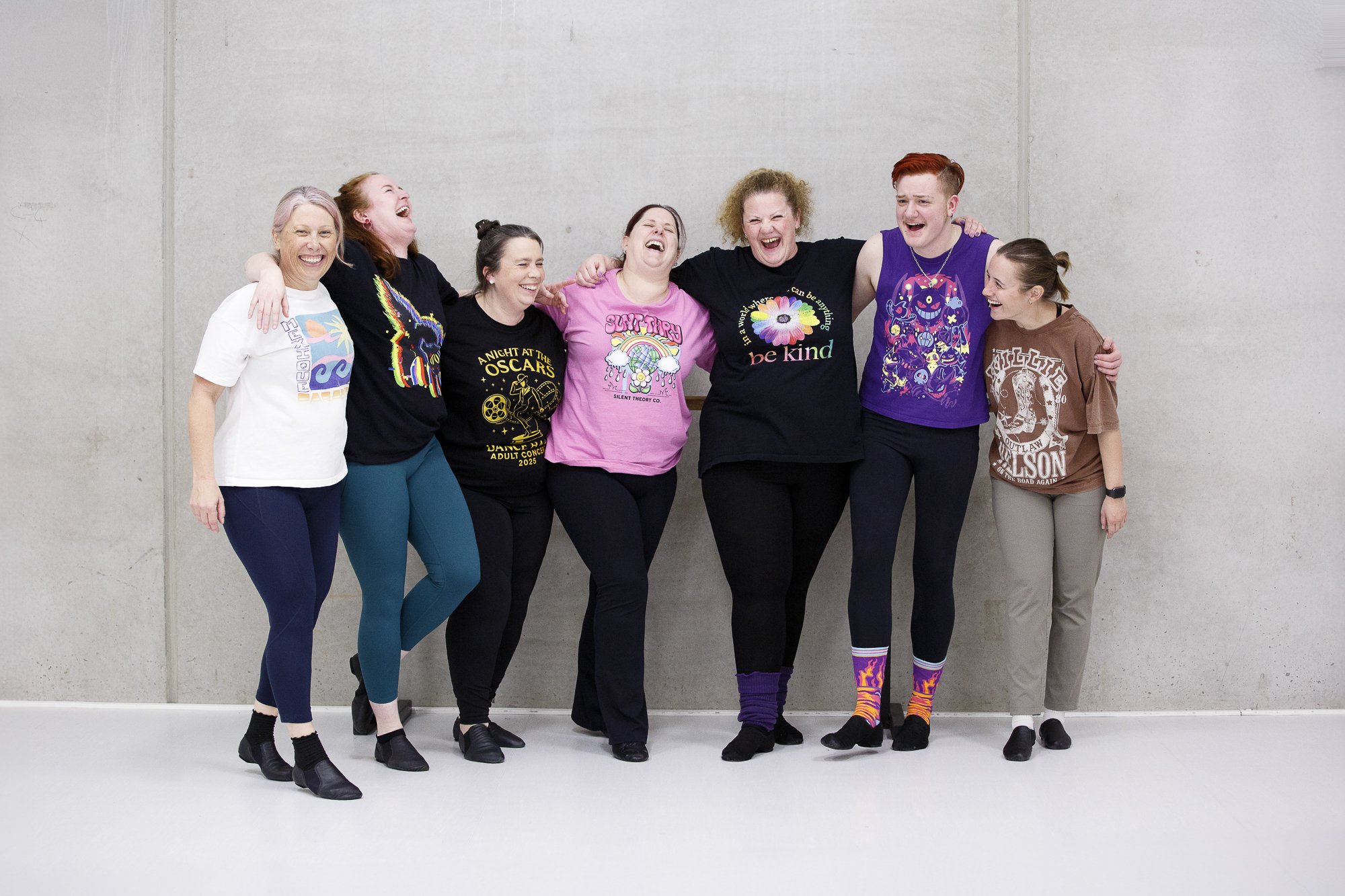
Sometimes I step back and reflect on how much our space has brought to the lives of so many. We've seen friendships form that have become cornerstones of people's lives. We've watched people walk through our doors isolated and leave with a community. We've had people tell us this is the one place in their week that's just for them - not for their family, not for their job, not for anyone's expectations. Just their own joy.
A few years ago, one of our team members received a notice threatening to cancel her visa - effectively a threat to remove her from the country, from everything she'd built here, from the people who loved her. She was part of our community. And without hesitation, people mobilised.
We raised over $8,000 for legal support. People wrote letters to politicians. Within hours of putting out a call, we had 20 letters of support and two JPs on site to witness and sign them.
That is not a dance school. That is a community.
That is what happens when you bring passion and people together consistently over time. The relationships form. The bonds strengthen. And then, when someone faces something hard (and we all do, eventually) they don't face it alone. They have an army of people standing behind them while they navigate the storm.
Find Your Place
If you have a third place, protect it. It's not a luxury. It's not indulgent. And despite what the relentless pace of modern life would have us believe - it's not selfish. It is, in the truest sense, the difference between existing and living.
If you are a parent or caregiver and your kids already have theirs because you've been pouring yourself into making it happen, you already know how much it matters. And you deserve that too.
If you don't have one yet, that's okay. But consider this your gentle nudge. What is the thing you've been putting off? The thing you feel drawn to - maybe something you missed out on as a child, or something you’re curious about. Perhaps there's a musical instrument you always wanted to learn, a hobby group you never got the opportunity to be part of, or a special interest you've been wanting to deep dive into.
We spend so much energy on the places we have to be. This one's about the place you choose. And, you never know - following your heart on this might just lead you to a community that has been waiting for you all along.
And when you find it - the place that would notice if you were gone - hold on to it.
Dance Habit is more than a dance studio. It's a community built around shared joy. If you're looking for your third place, we'd love to be it.
